While watching Inside Out 2 on a flight recently, I was struck by how emotions were personified as characters with distinct traits. It got me thinking — if sushi types had personalities, which one would I be? Without a doubt, I’d be an Uramaki.
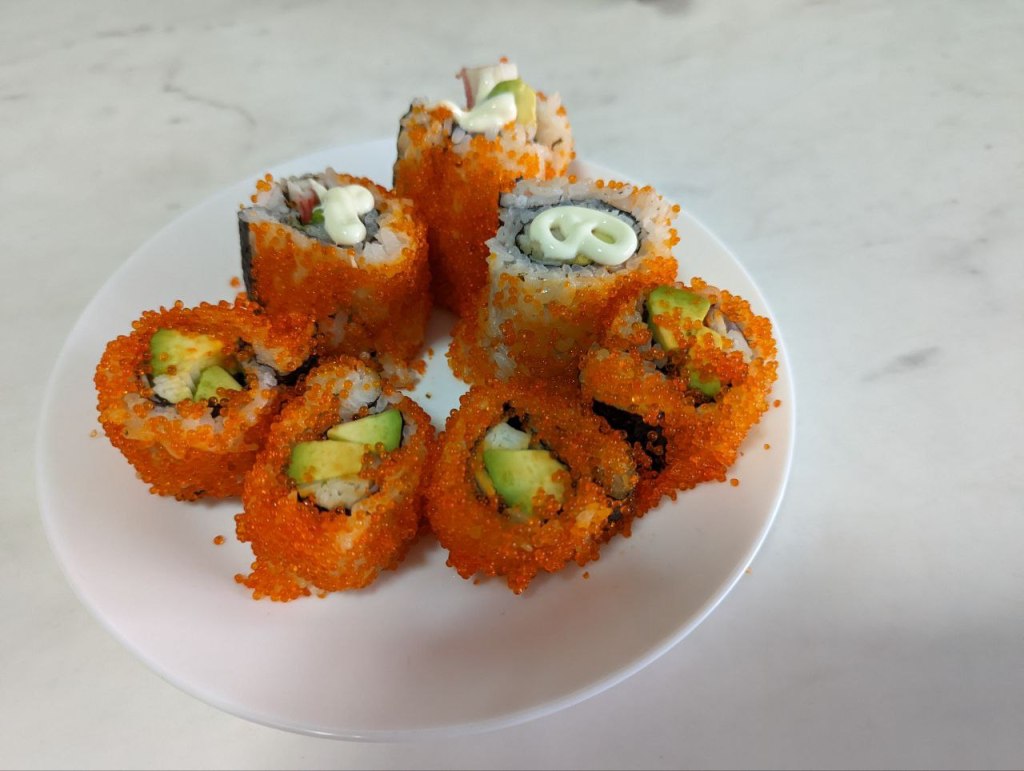
Unlike traditional Maki rolls, Uramaki turns tradition inside out by placing the rice on the outside and hiding the seaweed inside. But this wasn’t just a playful twist — it was insight-driven. Western diners in Los Angeles found seaweed visually unappealing, so a sushi chef flipped it, letting the rice take centre stage. The result? A sushi roll that became a global hit. Interestingly, Uramaki isn’t as popular in Japan, where tradition holds strong.
This story resonates with me. Uramaki symbolises flipping perspectives, and I strive to do the same in my role as a Product Manager, UX Designer, and creative thinker. But being an Uramaki requires more than just creativity — it demands intention, purpose, and clarity.
I learnt this 4-quadrant concept during my time at advertising school (I can’t recall the original source of the article, but it left a lasting impact). I’ve since reinterpreted this and mashed it up with the philosophy of Uramaki. Together, they guide my approach as a Product Manager, UX Designer, and creative thinker — challenging norms, flipping perspectives, and pushing for work that is not only creative but also brilliant, different, and truly innovative.
The 4 Quadrants of Uramaki Thinking
To embody the Uramaki mindset, you must evaluate your work against these four quadrants. Each one builds on the previous, encouraging you to go beyond surface-level ideas and aim for meaningful, lasting impact.
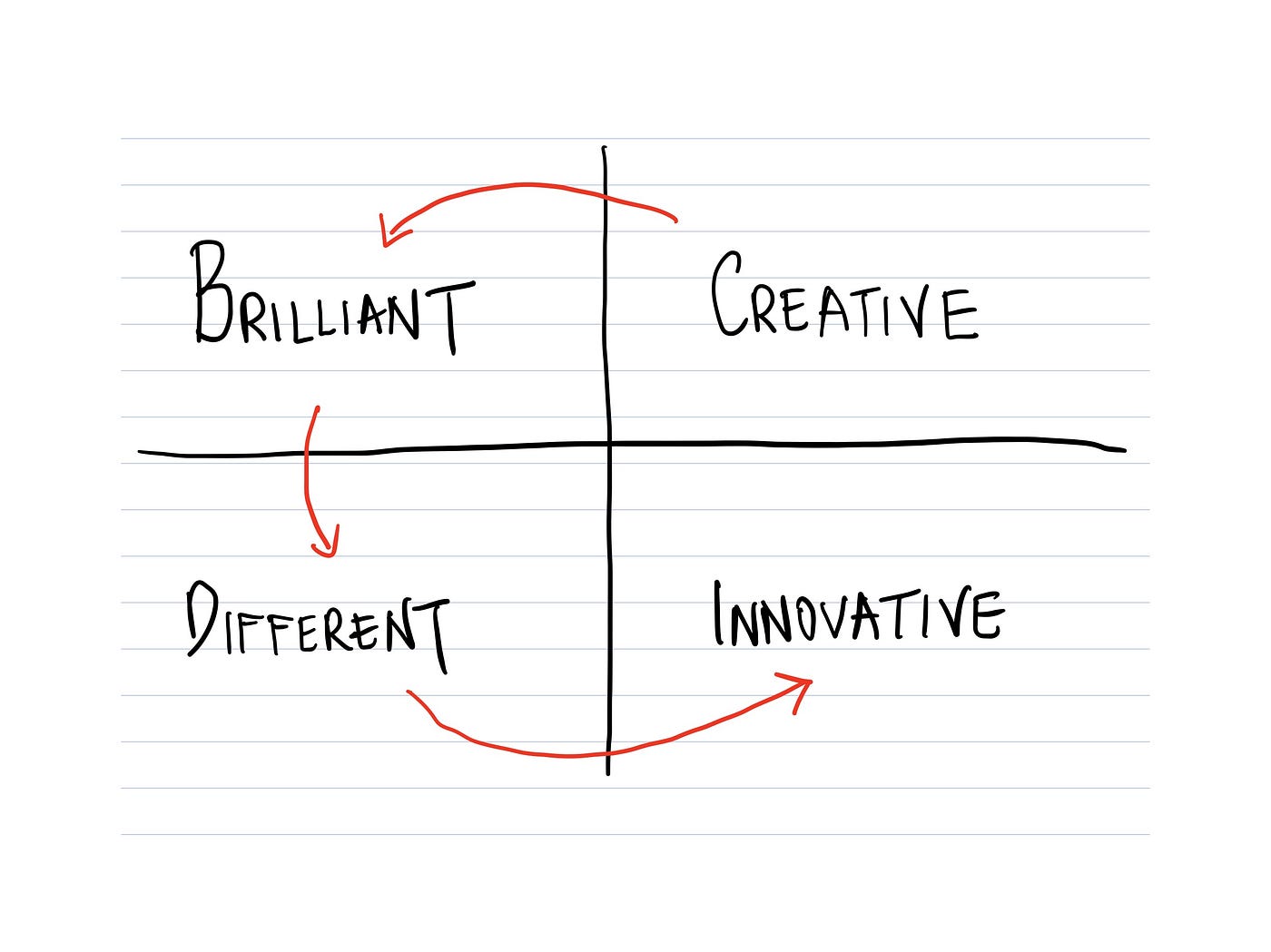
1️⃣ Creative: The Starting Point
Creativity is where it all begins — it’s where you “flip the roll.” This is the stage where you challenge assumptions, question norms, and offer fresh perspectives. Like the sushi chef who turned seaweed inside out, creativity is about rewriting the rules and taking that first bold step.
However, creativity alone isn’t enough — creativity without clarity becomes noise.
Ask yourself:
- Am I offering a fresh perspective or just following trends?
- Have I challenged the “default” approach?
Pro Tip: Creativity is your foundation. Start by flipping the obvious and questioning the status quo to unlock new possibilities.
2️⃣ Brilliant: Refining the Idea
Once you’ve sparked creativity, the next step is to refine it into something brilliant. Brilliance ensures your idea has purpose and clarity — it solves a real problem or addresses a genuine need. Flipping the seaweed wasn’t just clever; it was driven by insight into diners’ preferences.
Without clarity, even the most creative ideas risk becoming gimmicks.
Ask yourself:
- Is this idea smart or just flashy?
- Can I clearly explain the “why” behind this choice?
Pro Tip: Brilliance is about execution with intent. If you can’t articulate the reasoning behind your idea, it’s not brilliance — it’s just noise.
3️⃣ Different: Standing Out with Purpose
Creativity and brilliance lay the groundwork, but standing out requires intentional differentiation. Being “different” isn’t about novelty for its own sake — it’s about solving problems in a way that separates you from the crowd. Uramaki didn’t just stand out visually; it addressed a specific issue for Western diners.
Ask yourself:
- How is this work different from everything else out there?
- Is it different for a reason, or just to grab attention?
Pro Tip: Different doesn’t mean random. True differentiation is rooted in insight and purpose. Without meaning, “different” becomes a gimmick.
4️⃣ Innovative: Leading the Way
Once you’ve differentiated your work, the final step is to take it further — to innovate. Innovation isn’t just about being different today; it’s about creating something that will still feel fresh and relevant years from now. Uramaki wasn’t just a new idea; it was a first-of-its-kind roll that redefined sushi for a global audience.
Innovation demands forward-thinking and experimentation, pushing beyond current trends to lead the industry.
Ask yourself:
- Will this still feel relevant 3–5 years from now?
- Am I leading the industry or just following trends?
Pro Tip: Innovation is about being first. Don’t aim to be the “next” version of something — aim to be the original. The world remembers innovators, not imitators.
Why These Quadrants Matter
It’s not enough to simply be creative or different. If you only excel in one quadrant, your work risks being forgettable:
- Only Creative? It’s fresh but lacks clarity.
- Only Brilliant? It’s smart but not memorable.
- Only Different? It stands out but feels like a gimmick.
- Only Innovative? It’s ahead of its time but misunderstood.
The goal isn’t to master every quadrant in every project — it’s to understand where your work currently sits and make deliberate adjustments. If you’re only in the Creative quadrant, push for more clarity. If you’re only in the Different quadrant, anchor your idea with purpose.
Look at brands like Tesla, OpenAI, or Alphabet. They don’t necessarily score high in all four quadrants, but they consistently position themselves in their desired one. When they miss the mark, they pivot towards innovation, ensuring their work remains impactful and forward-thinking.
The Role of Stakeholders in Uramaki Thinking
Innovation doesn’t happen in isolation. It’s not enough to tell a team to “be creative” or “think outside the box.” To achieve Uramaki-level results, stakeholders must create the right environment for innovation.
Here’s how stakeholders can support Uramaki Thinking:
- Support Risk-Taking — If you want bold, creative work, give the team space to challenge assumptions. Don’t expect Uramaki results while forcing them to produce Maki rolls.
- Ask for Insights, Not Just Ideas — Don’t judge an idea on its appearance. Ask for the “why” behind it. The sushi chef didn’t just focus on visuals — he recognised flipping the seaweed solved a real issue.
- Think Beyond Trends — Don’t chase “quick wins” or “what’s trending.” Uramaki-level thinking isn’t reactive — it’s proactive. Encourage teams to think ahead of trends, not follow them.
Pro Tip: If you demand “safe innovation,” you’ll get safe results. But if you create space for risk, insight, and originality, you’ll achieve work that is bold, brilliant, different, and innovative.
How to Apply Uramaki Thinking Today
You don’t need to be a sushi chef to adopt Uramaki Thinking. Here’s how to apply it to your work:
1️⃣ Check Your Quadrants
Take a current project, campaign, or design and ask:
- Is it creative? Did I challenge the norm?
- Is it brilliant? Can I explain the “why”?
- Is it different? Does it stand out with meaning?
- Is it innovative? Will it still feel relevant in 3–5 years?
If your work sits in a quadrant that isn’t the one you intended, push it further.
2️⃣ Flip the Default Approach
Identify a “default” decision in your work and flip it.
Example: If you’ve always placed navigation at the top of a website, try moving it to the side.
Breakthroughs don’t come from following best practices — they come from flipping the seaweed.
3️⃣ Challenge Your Stakeholders
If you work with managers, clients, or senior leaders, challenge them to support Uramaki Thinking. Without space to experiment, you’ll never produce boundary-pushing work.
The Final Flip
Check your work — is it Creative, Brilliant, Different, and Innovative? If it isn’t, it’s time to flip the roll.
Take inspiration from Uramaki and flip perspectives. Your next big breakthrough might just be hiding beneath a layer of seaweed.
 Eida
Eida 